
Call us now :08037736953
 Send Inquiry
 Send Inquiry
Honeywell Industrial Oil Meters Elster 15, 20 & 25
MOQ : 1 Piece
Honeywell Industrial Oil Meters Elster 15, 20 & 25 Specification
- Protection
- IP54 (splash-proof)
- Measurement Range
- Model 15: 0.1-2.5 m3/h, Model 20: 0.16-4 m3/h, Model 25: 0.25-6.5 m3/h
- Pressure Range
- Up to 16 bar (PN16)
- Flow Rate
- Model 15: 0.1-2.5 m3/h, Model 20: 0.16-4 m3/h, Model 25: 0.25-6.5 m3/h
- Sensor Type
- Positive Displacement (Oscillating Piston Type)
- Diameter
- 15 mm, 20 mm, 25 mm
- Connectivity Type
- Pulse Output (Optional)
- Temperature Range
- -10C to +60C
- Equipment Type
- Industrial Oil Meter
- Resolution
- 0.01 Liter
- Application Media
- Industrial Oils, Light and Heavy Oils, Fuel Oils
- Humidity %
- 0-100% (Non-condensing)
- Capacity
- Up to 100,000 Liters (Register)
- Material
- Metal
- Power Supply
- Not Required (Mechanical Operation)
- Power Consumption
- Zero (No Electronic Components)
- Accuracy
- 0.5% of reading
- Display Type
- Analog Only
- Color
- Red and Black
- Range
- 0.1 - 25 m3/h (varies by model)
- Mounting Orientation
- Horizontal
- Dimensions (LxW)
- Model 15: 195x85 mm, Model 20: 195x85 mm, Model 25: 225x100 mm
- Connection Type
- Threaded or Flanged
- Pulse Output
- Reed Switch (Optional), up to 1 pulse per liter
- Kinematic Viscosity Range
- 1-600 mm2/s (cSt)
- Weight
- 3.7-6.5 kg (Depending on Size)
- Maintenance
- Minimal, Serviceable Design
- Model Variants
- Elster 15, Elster 20, Elster 25
Honeywell Industrial Oil Meters Elster 15, 20 & 25 Trade Information
- Minimum Order Quantity
- 1 Piece
- Payment Terms
- Cash in Advance (CID), Cash Advance (CA)
- Supply Ability
- 100 Pieces Per Week
- Delivery Time
- 1 Days
About Honeywell Industrial Oil Meters Elster 15, 20 & 25
Honeywell Industrial Oil Meters Elster 15, Elster 20, Elster 25 are high precision oscillating piston oil meters, covers a range of flows from 2.6 to 800 GPH. These meters are capable of handling a wide viscosity range including light and medium heating oil, diesel, and even heavy heating oil (meters 34 and 1) .- Accuracy is 1%
- Maximum operating pressure is 225 PSI (15 Bar)
- Maximun operating temperature is 266oF(130oC)
MODELS:
- Elster 15 : 1/2", Maxm Flow 2.6 GPH
- Elster 20 : 3/4", Maxm Flow 8 GPH
- Elster 25 : 1", Maxm Flow 8 GPH
Precise Oil Flow Measurement for Industrial Applications
Honeywell's Elster Oil Meter series is engineered for precision in monitoring industrial oil and fuel oil flow rates. With options tailored for varied capacities and accurate analog display, these meters support consistent, high-fidelity data. The serviceable design keeps downtime low, while the sturdy metal build ensures durability in tough environments.
Designed for Flexibility and Easy Installation
Choose from threaded or flanged connections and enjoy hassle-free horizontal mounting with the Honeywell Elster meters. Available in three model sizes, the compact dimensions and versatile configuration suit numerous installation points, making integration simple for new or retrofit projects.
Reliable Performance and Maintenance Simplicity
Minimal maintenance is required thanks to the refined positive displacement technology. With splash-proof IP54 protection and no reliance on electronic components or power supply, these meters excel in both remote and standard industrial settings, delivering uninterrupted service in challenging Indian conditions.
FAQ's of Honeywell Industrial Oil Meters Elster 15, 20 & 25:
Q: How do the Honeywell Elster Industrial Oil Meters measure flow accurately?
A: The Elster oil meters utilize a positive displacement, oscillating piston design that physically measures each volume of oil passing through. This mechanical operation ensures consistent accuracy within 0.5% of the reading, regardless of fluctuating flow rates within the specified model ranges.Q: What types of oils and applications are suitable for these meters?
A: These meters are engineered for industrial oils, including both light and heavy oils and fuel oils. Their robust construction and wide kinematic viscosity range (1-600 mm2/s) ensure compatibility with various lubricant and energy management applications in industrial environments.Q: When and where should these oil meters be installed?
A: The Elster series is optimal for indoor or sheltered outdoor locations where media temperature is between -10C and +60C, and the humidity does not result in condensation. They are designed for horizontal pipe orientation and can be easily mounted using threaded or flanged connections in facilities across India.Q: What is the process for connecting and commissioning the Elster 15, 20, or 25 models?
A: Installation involves securing the meter in a horizontal orientation using the chosen threaded or flanged connection. Initial commissioning typically includes flushing the pipeline, verifying mechanical alignment, and checking for any leaks. No electrical wiring is necessary unless a pulse output is being utilized.Q: How is maintenance performed and how often is it required?
A: These oil meters require minimal maintenance due to their mechanical design and quality materials. Periodic checks typically involve visual inspection, cleaning of the analog display, and, if necessary, internal cleaning to remove any accumulation. Major servicing is rarely required under normal usage conditions.Q: What are the key benefits of using Honeywell Elster Oil Meters?
A: Benefits include reliable mechanical operation with zero power consumption, high measurement resolution (0.01 liters), IP54 splash-proof protection, and a long register capacity (up to 100,000 liters). The meters are durable, easy to service, and optionally provide a pulse output for remote data logging or process automation.Q: Can I integrate these meters with digital systems?
A: While the primary display is analog, models offer an optional reed switch pulse output (up to 1 pulse per liter), which enables integration with external counters, building management systems, or process automation for efficient monitoring and control.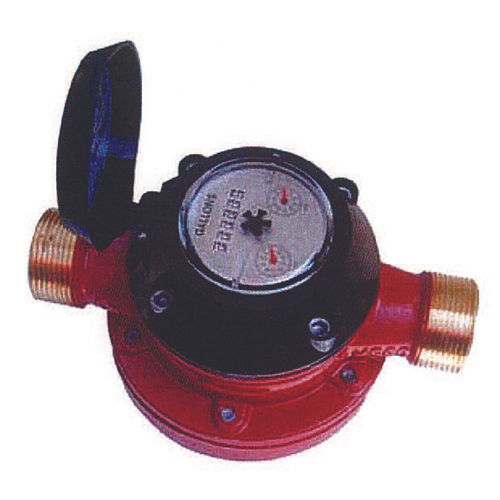
Tell us about your requirement

Price:
Quantity
Select Unit
- 50
- 100
- 200
- 250
- 500
- 1000+
Additional detail
Mobile number
Email

More Products in Honeywell Oil Flow Meter Category
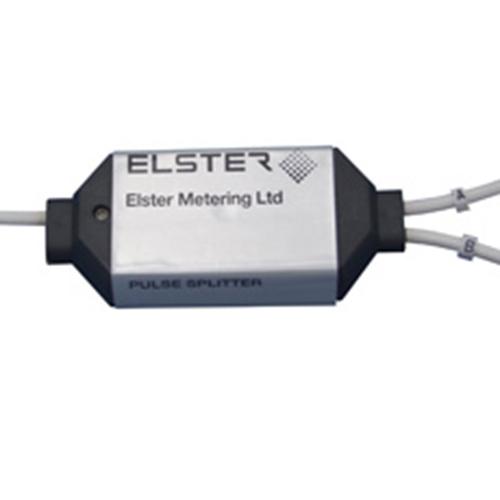
Honeywell Pulse Splitter Elster PS100
Price Range 10000.00 - 40000.00 INR
Minimum Order Quantity : 1 Piece
Color : Black and Grey
Material : Plastic
Display Type : Digital Only
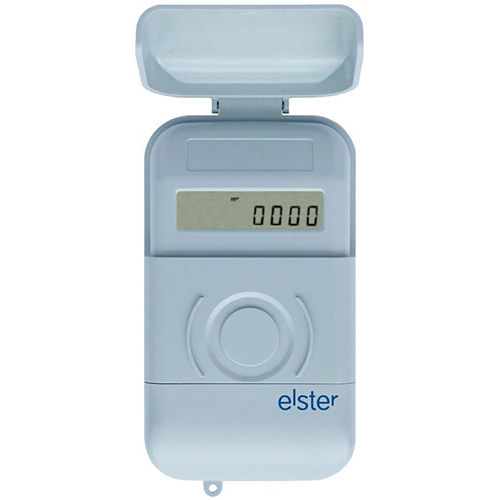
Honeywell Electronics Remote Reader Elster T210
Price 18500 INR / Piece
Minimum Order Quantity : 1 Piece
Color : Grey
Material : Plastic
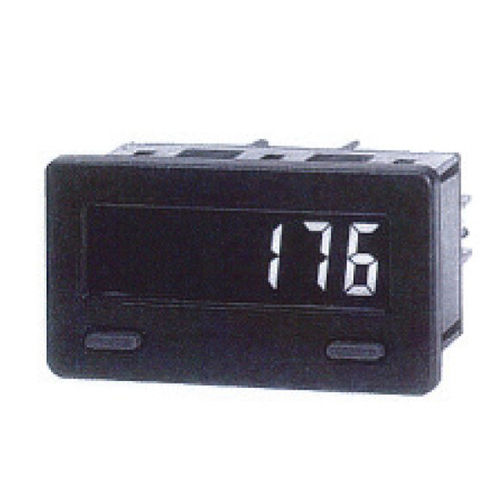
Honeywell Totalizing Counter Elster CTR30
Price 3500 INR / Piece
Minimum Order Quantity : 1 Piece
Color : Black
Material : Plastic
Display Type : Digital Only
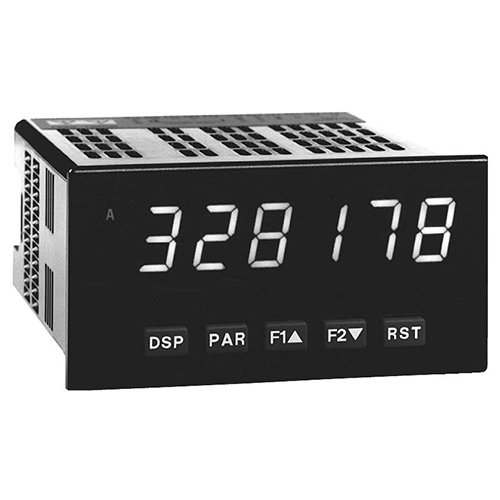
Honeywell Electronic Batch Control Elster CTR31AK
Price Range 5000.00 - 10000.00 INR
Minimum Order Quantity : 1 Piece
Color : Black
Material : Metal
Display Type : Digital Only


 Send Inquiry


Our Products
- Honeywell Gas Burner Controls
- Honeywell HVAC Controls
- Honeywell Paperless Recorders
- Honeywell Limit Switches
- Baumer Pressure & Temp Gauges
- Dwyer HVAC Sensors
- Honeywell Micro Switches
- Honeywell PID Controllers
- Honeywell Sensor IC Chips
- Greystone HVAC Sensors
- Thermodynamic Steam Traps
- Kavlico Pressure Transmitters
- City Technology Gas Sensors
- Honeywell Thermostat Switches
- Secure Energy Meter
- Honeywell Water Meter
- Honeywell Oil Flow Meter
- Honeywell Pressure Transmitter
- Honeywell Barcode Scanner
- Honeywell Safety Products
- Honeywell RFID System
- Honeywell Mobile Computer
- Honeywell Barcode Printer
- Honeywell Particle Sensor
- IP Converter
- Pneumatic Positioner
- Proximity Sensor
- Rotary Encoder
- Programmable PID Controllers
- Switch Mode Power Supply
- ABB Electromagnetic Products
- City Technology Sensors
- Secure Bi-Directional Meters
- Autonics Products
- Electromagnetic Flow Meter
- Fiber Optic Cable
- Optical Amplifiers
- Modular Tower Light
- Piezo Buzzer
- Photoelectric Sensors
- Digital Counters
- Hybrid Recorder
- Digital Paperless Recorder
- Vision Sensors
- Piston Valves
- Honeywell Torque Sensor
- IOT Gateway and IOT Devices
- Dew Point Sensors
- Thermal Transfer Ribbon
- Temperature Sensors
- Level Switch


232, Sunrise Mall, Near Swaminarayan Mandir, Judges Bungalow Road, Vastrapur, Ahmedabad - 380015, Gujarat, India

Mr Rajesh Garg
(CEO)
Mobile :08037736953
 Send Inquiry
 Send SMS
Developed and Managed by Infocom Network Private Limited.


 English
 Spanish
 French
 German
 Italian
 Chinese (Simplified)
 Japanese
 Korean
 Arabic
 Portuguese