
Call us now :08037736953
 Send Inquiry
 Send Inquiry
Secure Meter Current Transducers
MOQ : 1 Piece
Secure Meter Current Transducers Specification
- Humidity %
- Up to 95% RH, non-condensing
- Capacity
- Standard industrial rating
- Equipment Type
- Current Transducer
- Diameter
- Standard - Panel / DIN rail mount
- Connectivity Type
- Screw Terminal
- Current Range
- 0-1 A / 0-5 A AC
- Sensor Type
- True RMS
- Temperature Range
- -10C to +55C
- Application Media
- Current Measurement
- Protection
- IP20 (housing), IP50 (front panel)
- Frequency
- 45-65 Hz
- Measurement Range
- 0-1A / 0-5A AC
- Resolution
- 0.01A
- Material
- ABS Plastic Enclosure
- Power Supply
- 24 - 240 V AC/DC
- Power Consumption
- <3 VA
- Accuracy
- 0.5% FSD
- Color
- White
- Display Type
- Analog Only
- Range
- -5 C to +55 C
- Output Signal
- 4-20 mA / 0-20 mA / 0-10 V DC
- Response Time
- <250 ms
- Isolation Voltage
- >2 kV RMS
- Weight
- Approx. 120 g (model dependent)
- Input Overload
- 120% of rated value continuous
- Mounting Type
- Panel or DIN Rail Mount
- Output Load Resistance
- max. 600 (for 20 mA), min. 5 k (for 10 V)
- Standards Compliance
- IEC 60688, CE Marked
Secure Meter Current Transducers Trade Information
- Minimum Order Quantity
- 1 Piece
- Payment Terms
- Cash in Advance (CID), Cash Advance (CA)
- Supply Ability
- 100 Pieces Per Month
- Delivery Time
- 1 Days
- Main Domestic Market
- South India
About Secure Meter Current Transducers
SECURE Current Transducers offers accurate true RMS measurements. Upto for load independent galvanically isolated analog ouptputs can be configured for desired input range. Theses transducers comply with IEC60688.
Reliable and Accurate Current Measurement
Designed to provide dependable current readings, this true RMS current transducer covers a measurement range of 0-1A and 0-5A AC, delivering precision with a resolution of 0.01A and accuracy of 0.5% FSD. It functions optimally within standard industrial environments, ensuring stable performance in temperatures from -10C to +55C and humidity up to 95% RH.
Flexible Output and Easy Integration
Offering analog output options (4-20 mA, 0-20 mA, or 0-10 V DC), this unit is compatible with most control and monitoring systems. With screw terminal connectivity and both panel and DIN rail mounting options, installation and maintenance are straightforward, reducing overall setup time for panel builders and system integrators.
Safety, Compliance, and Endurance
Safety is prioritized with isolation voltage over 2kV RMS and overload protection up to 120% of rated input. The housing meets IP20/in front panel IP50 protection, and the product complies with IEC 60688 as well as CE marking-providing assurance of quality and international standards adherence for both domestic and export markets.
FAQ's of Secure Meter Current Transducers:
Q: How do I install the Secure Meter Current Transducer?
A: You can install this current transducer on either a panel or a DIN rail. It features screw terminal connectivity, allowing for a secure and efficient wiring process. Standard dimensions supporting panel or DIN rail mounting ensure a seamless fit in most industrial control cabinets.Q: What benefits does the True RMS sensor provide for current measurement?
A: A True RMS sensor yields accurate measurement results even for non-sinusoidal waveforms, ensuring precise current monitoring in complex loads or where waveform distortion may occur-enhancing operational reliability and control in industrial applications.Q: When should I use the 4-20 mA, 0-20 mA, or 0-10 V DC output signal?
A: The choice of output depends on your application requirements and the specifications of your control or monitoring equipment. The 4-20 mA output is standard for transmitting analog signals over long distances with minimal interference, while 0-20 mA and 0-10 V DC are suitable for closer integrations or specific panel meter compatibility.Q: Where can this current transducer be implemented?
A: This device is suited for a broad range of industrial applications, including power distribution panels, process control, and energy management systems, especially where reliable AC current measurement (0-1A or 0-5A) and compliance with IEC 60688 standards are required.Q: What is the typical response time, and why does it matter?
A: The transducer features a response time of less than 250 ms, enabling nearly real-time current monitoring. This is critical for systems where prompt detection and reporting of current variations are necessary for effective control or protective measures.Q: How does the unit ensure user and equipment safety?
A: The device offers input overload protection up to 120%, electrical isolation greater than 2 kV RMS, and meets IP20 (housing) and IP50 (front panel) protection standards. Compliance with IEC 60688 and CE marking further assures safe operation and adherence to international quality norms.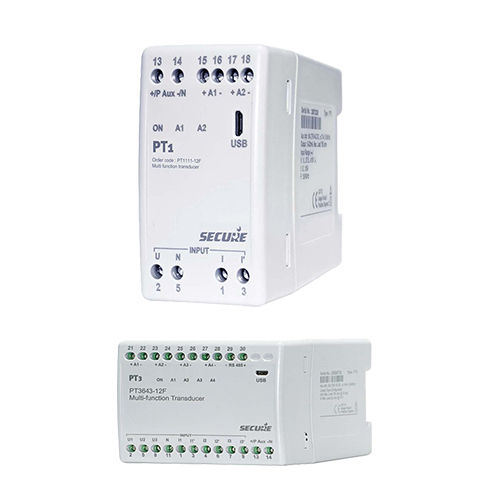
Tell us about your requirement

Price:
Quantity
Select Unit
- 50
- 100
- 200
- 250
- 500
- 1000+
Additional detail
Mobile number
Email

More Products in Secure Energy Meter Category
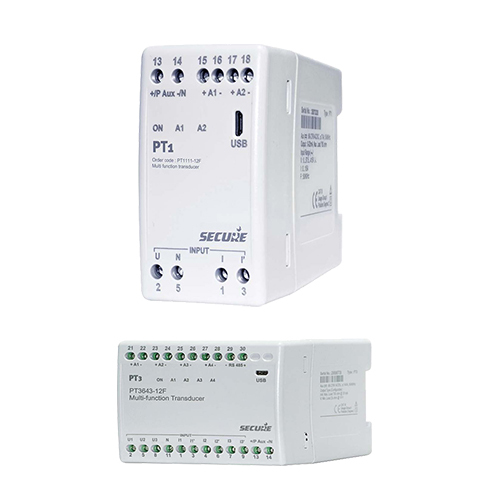
Secure Meter Watt Transducers
Price Range 2000.00 - 5000.00 INR
Minimum Order Quantity : 1 Piece
Color : White
Power Supply : 110240V AC, 50/60 Hz (typical)
Display Type : Analog Only
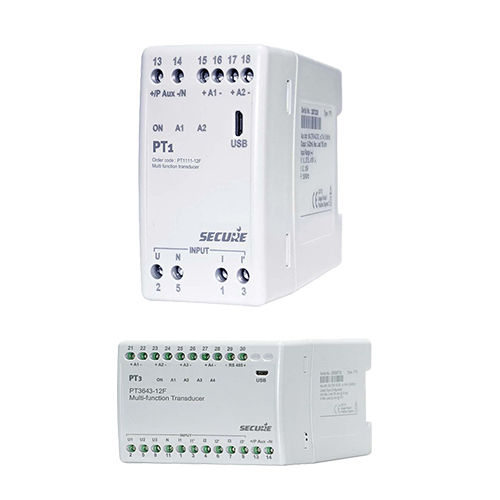
Secure Meter Frequency Transducer
Price Range 2000.00 - 5000.00 INR
Minimum Order Quantity : 1 Piece
Color : White
Power Supply : 110230V AC/DC, 50/60Hz
Display Type : Analog Only
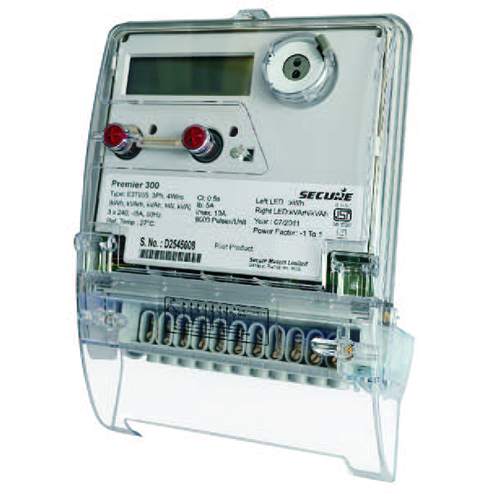
Secure Meter Domestic Energy Meter Premier 300
Price 25000 INR
Minimum Order Quantity : 1 Piece
Color : White
Power Supply : 230240 V
Display Type : Analog And Digital
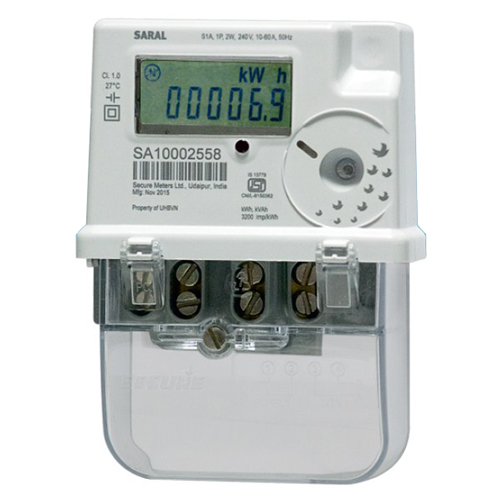
Secure Meter Bidirectional Meter Saral
Price Range 5000.00 - 10000.00 INR
Minimum Order Quantity : 1 Piece
Color : White
Power Supply : 0.5W and 1 VA
Display Type : Digital Only


 Send Inquiry


Our Products
- Honeywell Gas Burner Controls
- Honeywell HVAC Controls
- Honeywell Paperless Recorders
- Honeywell Limit Switches
- Baumer Pressure & Temp Gauges
- Dwyer HVAC Sensors
- Honeywell Micro Switches
- Honeywell PID Controllers
- Honeywell Sensor IC Chips
- Greystone HVAC Sensors
- Thermodynamic Steam Traps
- Kavlico Pressure Transmitters
- City Technology Gas Sensors
- Honeywell Thermostat Switches
- Secure Energy Meter
- Honeywell Water Meter
- Honeywell Oil Flow Meter
- Honeywell Pressure Transmitter
- Honeywell Barcode Scanner
- Honeywell Safety Products
- Honeywell RFID System
- Honeywell Mobile Computer
- Honeywell Barcode Printer
- Honeywell Particle Sensor
- IP Converter
- Pneumatic Positioner
- Proximity Sensor
- Rotary Encoder
- Programmable PID Controllers
- Switch Mode Power Supply
- ABB Electromagnetic Products
- City Technology Sensors
- Secure Bi-Directional Meters
- Autonics Products
- Electromagnetic Flow Meter
- Fiber Optic Cable
- Optical Amplifiers
- Modular Tower Light
- Piezo Buzzer
- Photoelectric Sensors
- Digital Counters
- Hybrid Recorder
- Digital Paperless Recorder
- Vision Sensors
- Piston Valves
- Honeywell Torque Sensor
- IOT Gateway and IOT Devices
- Dew Point Sensors
- Thermal Transfer Ribbon
- Temperature Sensors
- Level Switch


232, Sunrise Mall, Near Swaminarayan Mandir, Judges Bungalow Road, Vastrapur, Ahmedabad - 380015, Gujarat, India

Mr Rajesh Garg
(CEO)
Mobile :08037736953
 Send Inquiry
 Send SMS
 Call Me Free
Developed and Managed by Infocom Network Private Limited.


 English
 Spanish
 French
 German
 Italian
 Chinese (Simplified)
 Japanese
 Korean
 Arabic
 Portuguese