
Call us now :08045477039
 Send Inquiry
 Send Inquiry
Piston Valves
MOQ : 1 Piece
Piston Valves Specification
- Material
- Forged Carbon Steel
- Operating Temperature
- Up to 450C
- Surface Finish
- Fully Machined, Polished
- Head Diameter
- As per customer requirement
- Material Grade
- ASTM A105
- Valve Size
- 1/2 inch to 6 inch
- Mounting Type
- Flanged / Screwed / Socket Weld
- Hardness
- HB 180 - 210
- Designed For
- Steam, Gas, Oil and Water Service
- Coating Type
- Rust Preventive Coating
- Operating Pressure
- Up to 800 Class (PN 63)
- Usage & Applications
- Isolation of fluids in pipelines, Industrial process control
- Valve Type
- Piston Valve
- Lubrication Type
- Grease Nipple Provided
- Body Test Pressure
- Hydrostatic tested at 1.5 times working pressure
- Packing
- Graphite / PTFE
- Flow Characteristic
- On-Off / Linear
- End Connection
- Flanged, Screwed, Socket Weld
- Bonnet Type
- Bolted Bonnet
- Leakage Class
- Class VI (Bubble Tight)
- Disc Material
- EN8 Steel / Stainless Steel
- Color
- Black Body with Silver Trim
- Seat Type
- Renewable / Integral
- Standards Followed
- BS 5154 / DIN / ANSI
Piston Valves Trade Information
- Minimum Order Quantity
- 1 Piece
- Payment Terms
- Cash in Advance (CID), Cash Advance (CA)
- Supply Ability
- 100 Pieces Per Week
- Delivery Time
- 1 Days
- Sample Policy
- Contact us for information regarding our sample policy
About Piston Valves
Piston valves are mechanical devices used for controlling the flow of fluids or gases in industrial systems. They consist of a piston that moves within a cylinder to regulate the opening and closing of the valve. Piston valves are commonly used in applications requiring high-pressure and high-temperature conditions, such as steam systems, power plants, chemical processing, and oil and gas industries. They offer precise control, excellent sealing capabilities, and durability in demanding environments.
Frequently Asked Questions (FAQ):
Q: What is a piston valve?
A: A piston valve is a mechanical valve that uses a piston to control the flow of fluids or gases. The piston moves within a cylinder, creating an opening or closing mechanism to regulate the flow rate and direction.
Q: What are piston valves used for?
A: Piston valves are used in various industrial applications to control fluid or gas flow. They are commonly found in steam systems, power plants, chemical processing, oil and gas industries, and other high-pressure and high-temperature environments.
Q: How do piston valves work?
A: Piston valves work by utilizing the movement of a piston within a cylinder. When the piston is in the open position, the fluid or gas can flow through the valve. When the piston is closed, it creates a seal, blocking the flow.
Q: What are the advantages of piston valves?
A: Piston valves offer several advantages, including precise flow control, high pressure and temperature capabilities, excellent sealing properties, durability, resistance to wear and corrosion, and suitability for a wide range of fluids and gases.
Q: Are piston valves suitable for high-pressure applications?
A: Yes, piston valves are well-suited for high-pressure applications. They are designed to withstand the forces exerted by high-pressure fluids or gases, ensuring reliable operation and maintaining tight sealing under challenging conditions.
Superior Sealing and Operational Safety
Piston Valves offer bubble-tight sealing (Class VI), ensuring zero leakage during operations. The unique bolted bonnet design provides robust construction, while renewable or integral seats allow for extended longevity. These valves are rigorously hydrostatically tested at 1.5 times working pressure, which guarantees operational safety and reliability even in high-pressure environments.
Versatility and Customization
Suitable for a wide range of industries, these piston valves accommodate various media, including steam, gas, oil, and water. Available in multiple mounting and end connection configurations, with head diameter and valve sizes tailored as per customer requirements, they serve diverse applications in industrial process control and isolation, offering flexibility for installation and operation.
Durability Backed by Advanced Materials
Use of high-quality stainless steel and forged carbon steel ensures corrosion resistance and durability. The product features rust preventive coating, fully machined and polished surfaces, and disc materials in EN8 or stainless steel, all contributing to a long service life even under demanding industrial conditions. The inclusion of graphite or PTFE packing enhances sealing integrity and operational efficiency.
FAQ's of Piston Valves:
Q: How are piston valves used in industrial applications?
A: Piston valves are primarily used for the isolation and control of fluids in industrial pipelines. Their robust design with on-off or linear flow characteristics makes them ideal for regulating steam, gas, oil, or water in various process control applications.Q: What materials are available for these piston valves?
A: These valves are constructed from high-grade stainless steel and forged carbon steel conforming to ASTM A105. The disc material options include EN8 steel and stainless steel, providing excellent strength and corrosion resistance suitable for demanding environments.Q: When is it advisable to use a piston valve with Class VI (bubble-tight) leakage performance?
A: Class VI bubble-tight piston valves are recommended when complete shutoff is required to prevent any leakage, especially in critical applications dealing with steam, volatile gases, or hazardous fluids, thus ensuring process safety and compliance.Q: Where are the suitable connection types for installing these piston valves?
A: The valves can be mounted using flanged, screwed, or socket weld end connections, providing flexibility for installation in different pipeline systems across industrial plants, refineries, and utilities.Q: What is the process for testing the quality of these piston valves?
A: Each valve is hydrostatically tested at 1.5 times the working pressure to ensure integrity and leak-proof performance. They are manufactured and inspected in line with international standards such as BS 5154, DIN, and ANSI.Q: Why choose piston valves with renewable or integral seats?
A: Valves with renewable seats allow for easier maintenance and extended product lifespan, as the seat can be replaced without replacing the entire valve, while integral seats offer simplicity and durability in stable operating conditions.Q: What are the benefits of using graphite or PTFE packing in piston valves?
A: Graphite and PTFE packings provide excellent sealing, chemical resistance, and high-temperature tolerance. This ensures the valve operates leak-free and with minimal friction, reducing maintenance for lengthy service periods.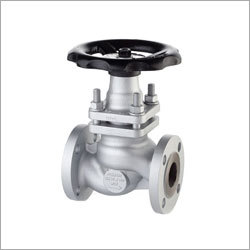
Tell us about your requirement

Price:
Quantity
Select Unit
- 50
- 100
- 200
- 250
- 500
- 1000+
Additional detail
Mobile number
Email


 Send Inquiry


Our Products
- Honeywell Gas Burner Controls
- Honeywell HVAC Controls
- Honeywell Paperless Recorders
- Honeywell Limit Switches
- Baumer Pressure & Temp Gauges
- Dwyer HVAC Sensors
- Honeywell Micro Switches
- Honeywell PID Controllers
- Honeywell Sensor IC Chips
- Greystone HVAC Sensors
- Thermodynamic Steam Traps
- Kavlico Pressure Transmitters
- City Technology Gas Sensors
- Honeywell Thermostat Switches
- Secure Energy Meter
- Honeywell Water Meter
- Honeywell Oil Flow Meter
- Honeywell Pressure Transmitter
- Honeywell Barcode Scanner
- Honeywell Safety Products
- Honeywell RFID System
- Honeywell Mobile Computer
- Honeywell Barcode Printer
- Honeywell Particle Sensor
- IP Converter
- Pneumatic Positioner
- Proximity Sensor
- Rotary Encoder
- Programmable PID Controllers
- Switch Mode Power Supply
- ABB Electromagnetic Products
- City Technology Sensors
- Secure Bi-Directional Meters
- Autonics Products
- Electromagnetic Flow Meter
- Fiber Optic Cable
- Optical Amplifiers
- Modular Tower Light
- Piezo Buzzer
- Photoelectric Sensors
- Digital Counters
- Hybrid Recorder
- Digital Paperless Recorder
- Vision Sensors
- Piston Valves
- Honeywell Torque Sensor
- IOT Gateway and IOT Devices
- Dew Point Sensors
- Thermal Transfer Ribbon
- Temperature Sensors
- Level Switch


232, Sunrise Mall, Near Swaminarayan Mandir, Judges Bungalow Road, Vastrapur, Ahmedabad - 380015, Gujarat, India

Mr Rajesh Garg
(CEO)
Mobile :08045477039
 Send Inquiry
 Send SMS
 Call Me Free
Developed and Managed by Infocom Network Private Limited.


 English
 Spanish
 French
 German
 Italian
 Chinese (Simplified)
 Japanese
 Korean
 Arabic
 Portuguese