
Call us now :08045477039
 Send Inquiry
 Send Inquiry
ABB Current to Pneumatic Converter
Price 7000 INR/ Piece
MOQ : 1 Piece
ABB Current to Pneumatic Converter Specification
- Port
- 1/8 Gauge
- Operating Temperature
- -20C to +70C
- Dimension (L*W*H)
- 6.8 x 4 x 4 Inch (in)
- Weight
- 0.4 to 1.2 kg (Model Dependent)
- Remote Control
- Yes
- Usage & Applications
- Process automation, pneumatic actuator control, valve positioners
- Interface Type
- 4-20 mA electrical input, pneumatic output
- IP Routing
- 65
- Frequency
- 50-60 Hz (power supply irrelevant, loop-powered)
- Network Device
- No
- Device Type
- Current to Pneumatic Converter
- Power Supply
- Loop Powered (4-20 mA loop)
- Power Consumption
- < 1 W
- Features
- Compact design, vibration-resistant, high accuracy, fail-safe function (option), easy installation
- Connectivity Type
- Wired, Electrical Connections
- Number Of Ports/Pins
- Two Electrical Terminals, One Pneumatic Port
- Cable Length
- Depends on installation
- Explosion Proof Version
- Available (model dependent)
- Protection Class
- IP65 (Dust and Water Jet Proof)
- Input Signal Range
- 4-20 mA DC
- Model Series
- ABB I/P Converter (e.g., TZIDC, IP600, etc.)
- Maintenance
- Low, periodic air filter cleaning recommended
- Linearity
- 0.1% of span
- Accuracy
- 0.2% of span
- Response Time
- < 1 second
- Shock Resistance
- Up to 10 g
- Material
- Aluminum or Stainless Steel Housing
- Output Connection
- 14 inch NPT or BSP
- Air Supply Pressure
- 1.4 bar (20 psi) nominal (dry, oil-free)
- Mounting Type
- DIN Rail, Wall or Surface Mount
- Output Pressure Range
- 0.2 - 1.0 bar / 3-15 psi
ABB Current to Pneumatic Converter Trade Information
- Minimum Order Quantity
- 1 Piece
- Payment Terms
- Cash in Advance (CID), Cash Advance (CA)
- Supply Ability
- 100 Pieces Per Week
- Delivery Time
- 1 Days
- Main Domestic Market
- All India
About ABB Current to Pneumatic Converter
General Specifications:
- Small dimensions
- Variable designs
- Control room housing IP 20, for rail and block mounting
- Field housing, polyester IP 54
- Field housing, aluminium IP 65
- Field housing, stainless steel IP 65
- High immunity to shocks and vibrations with an effect < 1% for loads up to 10 g
- Wide temperature range
- -40 deg C (optionally -55 deg C) to 85 deg C
- Worldwide approvals for Explosion Proof and Intrinsic Safety
Seamless Integration in Automation Systems
Easily connect the ABB I/P Converter to any process automation system thanks to its loop-powered 4-20 mA interface and multiple mounting options, including DIN rail, wall, or surface mount. Its compact and lightweight design simplifies installation in both new and retrofit setups, ensuring adaptability throughout your plant.
Engineered for Reliability and Safety
Built to withstand rigorous industrial demands, this converter features IP65 protection, shock resistance up to 10 g, and is available in explosion-proof versions as needed. Its fail-safe function and high linearity safeguard your operations, making it a trusted choice for actuator and valve positioner control in hazardous environments.
FAQ's of ABB Current to Pneumatic Converter:
Q: How does the ABB Current to Pneumatic Converter function within an automation system?
A: The converter accepts a standard 4-20 mA electrical input and proportionally converts it into a pneumatic output pressure (0.2-1.0 bar or 3-15 psi). This output can control pneumatic actuators or valve positioners for precise process automation.Q: What are the main benefits of using this I/P Converter?
A: Its high accuracy (0.2% of span), quick response time (under 1 second), and robust construction ensure reliable and efficient conversion. The IP65-rated, shock-resistant design and availability of explosion-proof models support safe, long-term operation in harsh industrial environments.Q: When should the air filter be cleaned to maintain optimal performance?
A: For best results, periodically inspect and clean the air filter as part of routine maintenance. Frequency depends on air quality and site conditions; typically, a monthly check is recommended in dusty or contaminated environments.Q: Where can this converter be mounted for installation?
A: It supports multiple installation options-DIN rail, wall, or surface mounting-enhancing flexibility and accommodating various system layouts in process automation plants.Q: What materials and protection features ensure durability in harsh conditions?
A: The housing is constructed from either aluminum or stainless steel, with a protection class of IP65 for dust and water jet resistance. Additionally, it is vibration-resistant (shock up to 10 g) and suitable for use in extreme temperatures from -20C to +70C.Q: What types of processes and applications is it commonly used for?
A: This I/P converter finds common use in process automation, pneumatic actuator control, and valve positioners, especially in applications demanding high reliability, quick response, and precise control over pneumatic systems.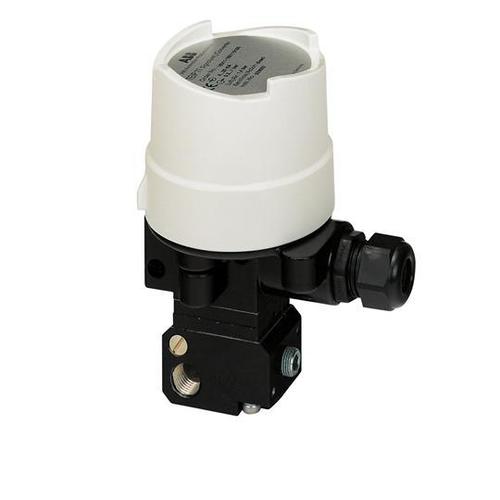
Tell us about your requirement

Price:
Quantity
Select Unit
- 50
- 100
- 200
- 250
- 500
- 1000+
Additional detail
Mobile number
Email

More Products in IP Converter Category
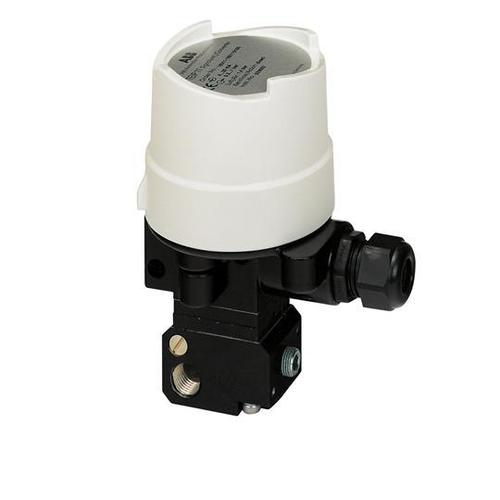
ABB IP Converter
Price 7000 INR / Piece
Minimum Order Quantity : 1 Piece
IP Routing : 65
Dimension (L*W*H) : 6.8 x 4 x 4 Inch (in)
Port : 1/8 gauge
Power Supply : Instrument Air


 Send Inquiry


Our Products
- Honeywell Gas Burner Controls
- Honeywell HVAC Controls
- Honeywell Paperless Recorders
- Honeywell Limit Switches
- Baumer Pressure & Temp Gauges
- Dwyer HVAC Sensors
- Honeywell Micro Switches
- Honeywell PID Controllers
- Honeywell Sensor IC Chips
- Greystone HVAC Sensors
- Thermodynamic Steam Traps
- Kavlico Pressure Transmitters
- City Technology Gas Sensors
- Honeywell Thermostat Switches
- Secure Energy Meter
- Honeywell Water Meter
- Honeywell Oil Flow Meter
- Honeywell Pressure Transmitter
- Honeywell Barcode Scanner
- Honeywell Safety Products
- Honeywell RFID System
- Honeywell Mobile Computer
- Honeywell Barcode Printer
- Honeywell Particle Sensor
- IP Converter
- Pneumatic Positioner
- Proximity Sensor
- Rotary Encoder
- Programmable PID Controllers
- Switch Mode Power Supply
- ABB Electromagnetic Products
- City Technology Sensors
- Secure Bi-Directional Meters
- Autonics Products
- Electromagnetic Flow Meter
- Fiber Optic Cable
- Optical Amplifiers
- Modular Tower Light
- Piezo Buzzer
- Photoelectric Sensors
- Digital Counters
- Hybrid Recorder
- Digital Paperless Recorder
- Vision Sensors
- Piston Valves
- Honeywell Torque Sensor
- IOT Gateway and IOT Devices
- Dew Point Sensors
- Thermal Transfer Ribbon
- Temperature Sensors
- Level Switch


232, Sunrise Mall, Near Swaminarayan Mandir, Judges Bungalow Road, Vastrapur, Ahmedabad - 380015, Gujarat, India

Mr Rajesh Garg
(CEO)
Mobile :08045477039
 Send Inquiry
 Send SMS
 Call Me Free
Developed and Managed by Infocom Network Private Limited.


 English
 Spanish
 French
 German
 Italian
 Chinese (Simplified)
 Japanese
 Korean
 Arabic
 Portuguese