
Call us now :08045477039
 Send Inquiry
 Send Inquiry
Dwyer Differential Pressure Gauge 0 to 100 mm
MOQ : 1 Piece
Dwyer Differential Pressure Gauge 0 to 100 mm Specification
- Product Type
- Pressure Gauge
- Material
- Metal
- Usage
- Display Pressure Difference, Between Two Pressure
- Accuracy
- 2 %
- Weight
- 510-963 Grams (g)
Dwyer Differential Pressure Gauge 0 to 100 mm Trade Information
- Minimum Order Quantity
- 1 Piece
- Payment Terms
- Cash in Advance (CID), Cash Advance (CA)
- Supply Ability
- 100 Pieces Per Week
- Delivery Time
- 1 Days
- Main Domestic Market
- All India
About Dwyer Differential Pressure Gauge 0 to 100 mm
Dwyer Magnehelic Differential Pressure Gages,Range: 0-100mmWC
Product descriptions
| Service: | Air and non-combustible, compatible gases (natural gas option available). Note: May be used with hydrogen. Order a Buna-N diaphragm. Pressures must be less than 35 psi |
| Wetted Materials: | Consult factor |
| Housing: | Die cast aluminum case and bezel, with acrylic cover. Exterior finish is coated gray to withstand 168 hour salt spray corrosion test |
| Accuracy: | ±2% of FS (±3% on - 0, -100 Pa, -125 Pa, 10MM and ±4% on - 00, -60 Pa, -6MM ranges), throughout range at 70°F (21.1°C) |
| Pressure Limits: | -20 in Hg to 15 psig (-0.677 to 1.034 bar); MP option: 35 psig (2.41 bar); HP option: 80 psig (5.52 bar). |
| Overpressure: | Relief plug opens at approximately 25 psig (1.72 bar), standard gages only. See Overpressure Protection Note on next page |
| Temperature Limits: | 20 to 140°F* (-6.67 to 60°C). -20°F (-28°C) with low temperature option |
| Size: | 4 (101.6 mm) diameter dial face |
| Mounting Orientation: | Diaphragm in vertical position. Consult factory for other position orientations |
| Standard Accessories: | Two 1/8 NPT plugs for duplicate pressure taps, two 1/8 pipe thread to rubber tubing adapter, and three flush mounting adapters with screws. (Mounting and snap ring retainer substituted for three adapters in MP & HP gage accessories.) |
Precise Monitoring for Critical Applications
The Dwyer Differential Pressure Gauge is engineered to provide reliable and precise measurements, helping users easily observe pressure differentials between two points. Its sturdy metal construction ensures longevity, while a high accuracy level supports quality assurance in environments where exact readings are essential.
Versatile Sourcing Across India
Available through a network of distributors, exporters, manufacturers, suppliers, and traders in India, this gauge is accessible for various industries. Its widespread availability guarantees timely procurement for businesses looking to upgrade or install differential pressure monitoring systems.
FAQ's of Dwyer Differential Pressure Gauge 0 to 100 mm:
Q: How is the Dwyer Differential Pressure Gauge installed and operated?
A: The gauge is typically mounted on a panel or surface between two pressure points. Each connection port is linked to the respective high and low-pressure zones. Operation involves reading the pointer display, which directly indicates the differential pressure across these points.Q: What materials are used in the construction of this pressure gauge?
A: The Dwyer Differential Pressure Gauge is constructed primarily from durable metal, ensuring resistance to damage, wear, and harsh industrial environments while maintaining reliable performance over time.Q: When should I use a differential pressure gauge in my systems?
A: A differential pressure gauge is ideal when you need precise monitoring of pressure differences, such as in filters, ventilation systems, or process lines, to ensure proper performance and detect blockages or inefficiencies.Q: Where can I purchase the Dwyer Differential Pressure Gauge in India?
A: You can obtain this gauge from a wide network of distributors, exporters, manufacturers, suppliers, and traders across India, making it easily accessible for both small and large-scale users.Q: What is the process for calibrating the Dwyer Differential Pressure Gauge?
A: Calibration involves comparing the gauge readings to a trusted standard and adjusting accordingly to ensure the 2% accuracy. This should be performed periodically, especially in critical applications, to maintain optimal performance.Q: How is this gauge used to display pressure difference between two points?
A: By connecting the gauge's ports to two different pressure locations, the instrument visually displays their pressure difference on the dial, allowing for immediate interpretation and response.Q: What are the main benefits of using the Dwyer Differential Pressure Gauge?
A: This gauge offers accurate readings (within 2%) and robust metal construction, promoting operational reliability and safety. Its ability to promptly display pressure differences helps optimize processes, detect abnormalities early, and reduce downtime.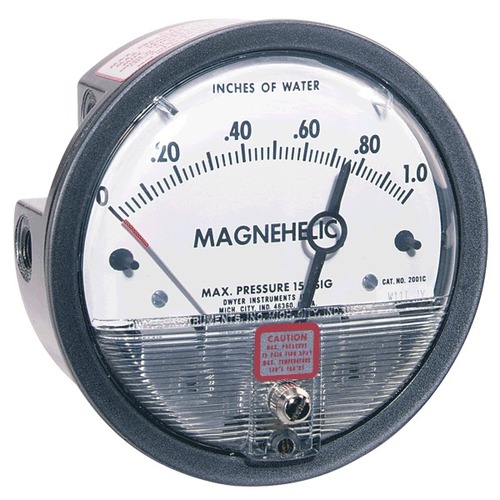
Tell us about your requirement

Price:
Quantity
Select Unit
- 50
- 100
- 200
- 250
- 500
- 1000+
Additional detail
Mobile number
Email

More Products in Dwyer HVAC Sensors Category
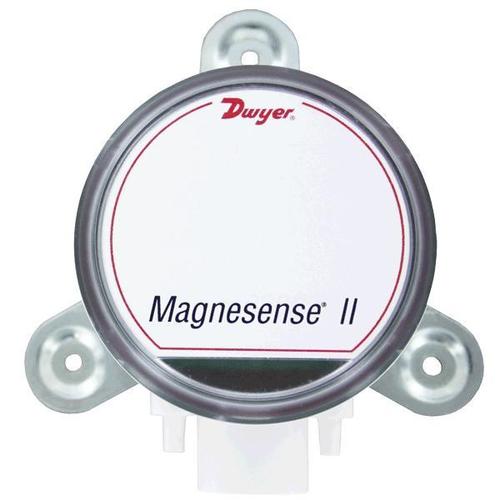
Dwyer Differential Pressure Transmitter MS2-W103
Price 7500 INR / Piece
Minimum Order Quantity : 1 , , Piece
Product Type : Pressure Transmitter
Material : Plastic
Weight : 110 g

Duct Mount Humidity/Temperature Transmitter
Price 1100 INR / Piece
Minimum Order Quantity : 1 , , Piece
Product Type : Temperature Transmitter
Material : Metal
Weight : Approx. 150g
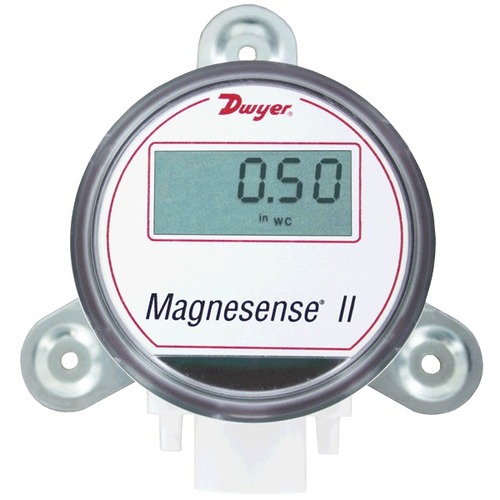
Dwyer Differential Pressure Transmitter MS2-W102
Price Range 4000.00 - 10000.00 INR / Piece
Minimum Order Quantity : 1 , , Piece
Product Type : Pressure Transmitter
Material : Plastic
Weight : Approx. 150 g
Dwyer Air Velocity Transmitter
Price 8500 INR / Piece
Minimum Order Quantity : 1 , , Piece
Product Type : Air Velocity Transmitter
Material : Plastic


 Send Inquiry


Our Products
- Honeywell Gas Burner Controls
- Honeywell HVAC Controls
- Honeywell Paperless Recorders
- Honeywell Limit Switches
- Baumer Pressure & Temp Gauges
- Dwyer HVAC Sensors
- Honeywell Micro Switches
- Honeywell PID Controllers
- Honeywell Sensor IC Chips
- Greystone HVAC Sensors
- Thermodynamic Steam Traps
- Kavlico Pressure Transmitters
- City Technology Gas Sensors
- Honeywell Thermostat Switches
- Secure Energy Meter
- Honeywell Water Meter
- Honeywell Oil Flow Meter
- Honeywell Pressure Transmitter
- Honeywell Barcode Scanner
- Honeywell Safety Products
- Honeywell RFID System
- Honeywell Mobile Computer
- Honeywell Barcode Printer
- Honeywell Particle Sensor
- IP Converter
- Pneumatic Positioner
- Proximity Sensor
- Rotary Encoder
- Programmable PID Controllers
- Switch Mode Power Supply
- ABB Electromagnetic Products
- City Technology Sensors
- Secure Bi-Directional Meters
- Autonics Products
- Electromagnetic Flow Meter
- Fiber Optic Cable
- Optical Amplifiers
- Modular Tower Light
- Piezo Buzzer
- Photoelectric Sensors
- Digital Counters
- Hybrid Recorder
- Digital Paperless Recorder
- Vision Sensors
- Piston Valves
- Honeywell Torque Sensor
- IOT Gateway and IOT Devices
- Dew Point Sensors
- Thermal Transfer Ribbon
- Temperature Sensors
- Level Switch


232, Sunrise Mall, Near Swaminarayan Mandir, Judges Bungalow Road, Vastrapur, Ahmedabad - 380015, Gujarat, India

Mr Rajesh Garg
(CEO)
Mobile :08045477039
 Send Inquiry
 Send SMS
Developed and Managed by Infocom Network Private Limited.


 English
 Spanish
 French
 German
 Italian
 Chinese (Simplified)
 Japanese
 Korean
 Arabic
 Portuguese