
Call us now :08045477039
 Send Inquiry
 Send Inquiry
Hazardous Area Humidity/Temperature Transmitter
Price 111000 INR/ Piece
MOQ : 1 Piece
Hazardous Area Humidity/Temperature Transmitter Specification
- IP Rating
- IP66
- Mounting Type
- Wall/Surface Mount
- Sensor Type
- Capacitive Humidity Sensor and RTD Temperature Sensor
- Sensitivity
- High Sensitivity for Environmental Changes
- Features
- Flameproof enclosure, explosion proof, compact design, maintenance free operation
- Power Consumption
- < 2W
- Wireless
- No
- Response Time
- < 10 seconds for humidity
- Application
- ATEX certified zones, hazardous locations requiring humidity/temperature control
- Measurement Range
- 0-100% RH, -40C to +80C
- Operating Temperature
- -40C to +80C
- Signal Type
- Analog Current Loop
- Interface
- Terminal Block
- Cable Length
- User Specified, standard 2 meters
- Product Type
- Humidity Transmitter
- Material
- Metal
- Input
- Power Supply 24V DC
- Output
- 4-20 mA
- Function
- Real-time humidity and temperature monitoring in hazardous/explosive environments
- Usage
- Industrial, chemical plants, oil & gas facilities
- Accuracy
- 2% RH, 0.3C
- Resolution
- 0.1% RH / 0.1C
- Voltage
- 24V DC Nominal
- Weight
- 1134 Grams (g)
- Enclosure Certification
- ATEX, IECEx Approved
- Compliance
- RoHS, CE Marked
- Explosion Proof Standard
- Ex d IIC T6 Gb
- Housing Finish
- Corrosion Resistant Coating
- Vibration Resistance
- Up to 2g
- Calibration
- Factory calibrated, field adjustable
- Temperature Compensation
- Integrated electronic compensation
- Display
- Digital LCD (Optional)
- Ingress Protection
- Dust and water proof
- Storage Temperature
- -40C to +85C
- Connector Type
- Cable Gland (flameproof)
- Humidity Element Protection
- Synthetic Filter Cap
- Drift
- <1% RH/year
Hazardous Area Humidity/Temperature Transmitter Trade Information
- Minimum Order Quantity
- 1 Piece
- Payment Terms
- Cash in Advance (CID), Cash Advance (CA)
- Supply Ability
- 50 Pieces Per Week
- Delivery Time
- 1 Days
- Main Domestic Market
- All India
About Hazardous Area Humidity/Temperature Transmitter
Dwyer Hazardous Area Humidity Temperature Transmitter
Takes accurate measurements in the harshest of environments. The transmitter is offered in explosion-proof and intrinsically-safe versions depending on the application requirements. The explosion-proof model is offered with 4 to 20 mA output for humidity only. The intrinsically-safe version is offered with 4 to 20 mA output for humidity and temperature. Both versions have an optional two line alphanumeric display to show the current humidity and temperature. The Series HHT humidity/temperature transmitter is excellent for offshore HVAC applications, dust and grain applications. Intrinsically safe models require an intrinsically safe barrier.
Superior Environmental Durability
Constructed with corrosion-resistant metal and certified for explosion-proof standards (Ex d IIC T6 Gb), this transmitter ensures robust protection in demanding environments. Its IP66 rating and synthetic filter cap shield the sensors against dust, moisture, and harsh chemicals, supporting long-term reliability and minimizing maintenance requirements even under severe conditions.
Precise and Responsive Measurement
Utilizing advanced capacitive humidity and RTD temperature sensors, this device delivers high accuracy (2% RH, 0.3C) and swift response times (under 10 seconds for humidity). Integrated electronic compensation further ensures stability, allowing for consistent measurements across the entire 0-100% RH and -40C to +80C range, critical for process safety in hazardous areas.
Adaptable and User-Friendly Operation
This transmitter is designed for flexible installation, supporting wall or surface mounting and cable lengths as specified by the user. It features analog current loop output (4-20 mA), optional digital LCD display, and intuitive factory calibration with field adjustability. Its compact design simplifies integration into existing systems without compromising on performance.
FAQ's of Hazardous Area Humidity/Temperature Transmitter:
Q: How is the transmitter installed in hazardous area environments?
A: The transmitter is designed for wall or surface mounting within hazardous locations, using a cable gland (flameproof) for secure wiring. Its compact enclosure and flexible cable specifications allow easy integration into industrial setups, ensuring compliance with ATEX and IECEx safety standards.Q: What industries and applications can benefit from this transmitter?
A: This device is ideal for chemical plants, oil and gas facilities, and any industrial site that requires real-time monitoring and control of humidity and temperature in potentially explosive atmospheres, particularly within ATEX-certified zones.Q: When should the transmitter be recalibrated?
A: While the transmitter is factory calibrated for immediate use, periodic calibration intervals depend on site requirements. Field adjustment is simple if needed, though with its stability of less than 1% RH per year drift, annual verification is often sufficient.Q: Where can the transmitter be operated, considering environmental conditions?
A: It functions reliably in environments ranging from -40C to +80C, and 0-100% relative humidity, with high resistance to dust, water (IP66), vibration (up to 2g), and corrosive atmospheres, making it suitable for both indoor and outdoor hazardous locations.Q: What is the process for connecting and powering this device?
A: Connection is achieved via a terminal block interface and a cable gland for secure, flameproof wiring. The transmitter requires a 24V DC nominal power supply and generates a standard 4-20 mA analog signal for easy integration with process control systems.Q: How does the transmitter maintain accuracy and stability over time?
A: The device features integrated electronic compensation and a synthetic filter cap protecting its sensors, ensuring high measurement precision (2% RH, 0.3C) and consistent operation with minimal drift, validated by its maintenance-free design.Q: What are the key benefits of using this transmitter in hazardous areas?
A: The main benefits include explosion-proof safety, real-time accurate monitoring, low maintenance requirements, and robust design suited for extreme industrial environments. These features help users ensure process safety, regulatory compliance, and optimal environmental control.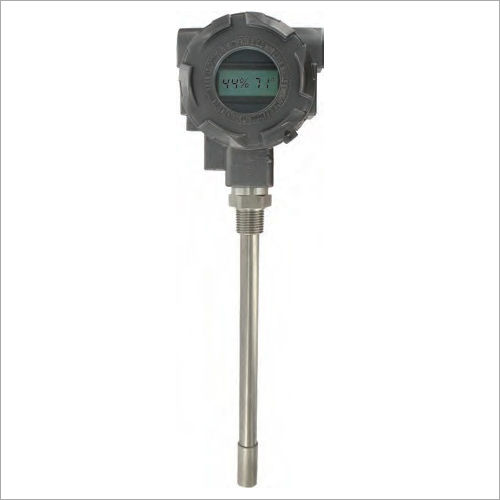
Tell us about your requirement

Price:
Quantity
Select Unit
- 50
- 100
- 200
- 250
- 500
- 1000+
Additional detail
Mobile number
Email

More Products in Dwyer HVAC Sensors Category
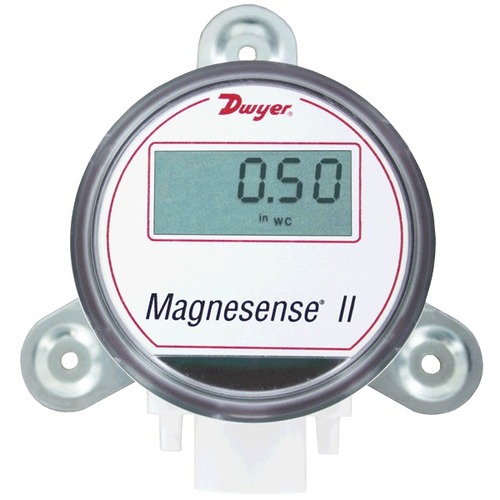
Dwyer Differential Pressure Transmitter MS2-W102
Price Range 4000.00 - 10000.00 INR / Piece
Minimum Order Quantity : 1 , , Piece
Usage : Monitoring pressure in HVAC systems, ducts, and filters
Product Type : Pressure Transmitter
Accuracy : +/ 0.25 %
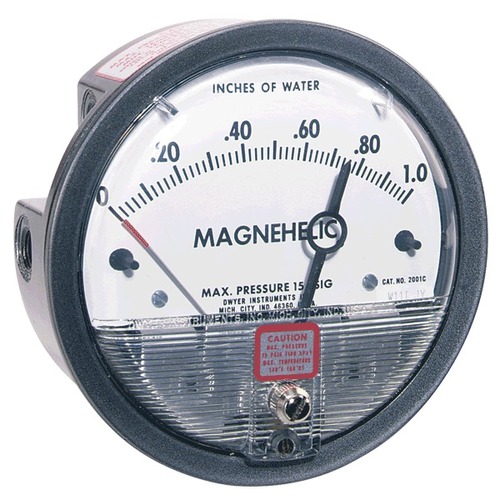
Dwyer Differential Pressure Gauge 0 to 25 mm
Price Range 5000.00 - 7700.00 INR
Minimum Order Quantity : 1 Piece
Usage : Display Pressure Difference, Between Two Pressure
Product Type : Pressure Gauge
Accuracy : 2 %
Dwyer Differential Pressure Gauge 0 to 1.5 KPa
Price Range 5000.00 - 7700.00 INR
Minimum Order Quantity : 1 Piece
Usage : Display Pressure Difference, Between Two Pressure
Product Type : Pressure Gauge
Accuracy : 2 %
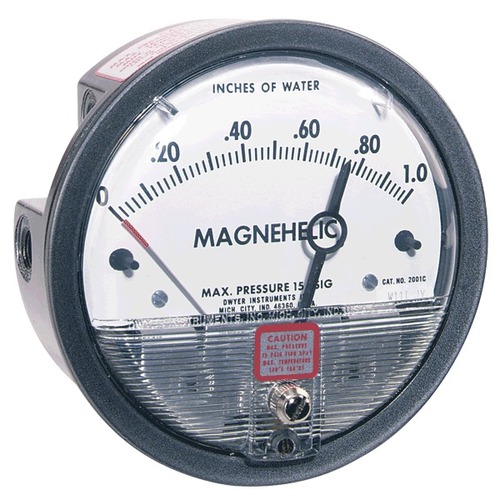
Magnehelic Differential Pressure Gauges
Price 7700 INR
Minimum Order Quantity : 1 Piece
Usage : Display Pressure Difference, Between Two Pressure
Product Type : Differential Pressure Gages
Accuracy : 2 %


 Send Inquiry


Our Products
- Honeywell Gas Burner Controls
- Honeywell HVAC Controls
- Honeywell Paperless Recorders
- Honeywell Limit Switches
- Baumer Pressure & Temp Gauges
- Dwyer HVAC Sensors
- Honeywell Micro Switches
- Honeywell PID Controllers
- Honeywell Sensor IC Chips
- Greystone HVAC Sensors
- Thermodynamic Steam Traps
- Kavlico Pressure Transmitters
- City Technology Gas Sensors
- Honeywell Thermostat Switches
- Secure Energy Meter
- Honeywell Water Meter
- Honeywell Oil Flow Meter
- Honeywell Pressure Transmitter
- Honeywell Barcode Scanner
- Honeywell Safety Products
- Honeywell RFID System
- Honeywell Mobile Computer
- Honeywell Barcode Printer
- Honeywell Particle Sensor
- IP Converter
- Pneumatic Positioner
- Proximity Sensor
- Rotary Encoder
- Programmable PID Controllers
- Switch Mode Power Supply
- ABB Electromagnetic Products
- City Technology Sensors
- Secure Bi-Directional Meters
- Autonics Products
- Electromagnetic Flow Meter
- Fiber Optic Cable
- Optical Amplifiers
- Modular Tower Light
- Piezo Buzzer
- Photoelectric Sensors
- Digital Counters
- Hybrid Recorder
- Digital Paperless Recorder
- Vision Sensors
- Piston Valves
- Honeywell Torque Sensor
- IOT Gateway and IOT Devices
- Dew Point Sensors
- Thermal Transfer Ribbon
- Temperature Sensors
- Level Switch


232, Sunrise Mall, Near Swaminarayan Mandir, Judges Bungalow Road, Vastrapur, Ahmedabad - 380015, Gujarat, India

Mr Rajesh Garg
(CEO)
Mobile :08045477039
 Send Inquiry
 Send SMS
Developed and Managed by Infocom Network Private Limited.


 English
 Spanish
 French
 German
 Italian
 Chinese (Simplified)
 Japanese
 Korean
 Arabic
 Portuguese