
Call us now :08045477039
 Send Inquiry
 Send Inquiry
Honeywell Temperature Transmitter
Price 4500.00 INR/ Piece
MOQ : 60 Pieces
Honeywell Temperature Transmitter Specification
- Phase
- Single Phase
- Weight
- Approx. 300g
- Load Capacity
- Standard Load
- Automation Grade
- Automatic
- Application
- Industrial, HVAC, Process Monitoring
- Remote Control
- Yes
- Control Type
- Analog/Digital
- Cable Length
- As per requirement
- Processor Type
- Microprocessor Based
- Connectivity Type
- 4-20mA, HART Protocol
- Mounting Type
- DIN Rail, Field Mount
- IP Rating
- IP66
- Features
- High Accuracy, Compact Design, Easy Calibration
- Frequency
- 50/60 Hz
- Sensor Type
- RTD, Thermocouple Compatible
- Material
- Metal
- Power
- 24V DC
- Temperature
- -40C to +120C
- Voltage
- 8-30 Volt (v)
- Ingress Protection
- IP66 (Dust & Water Resistant)
- Calibration
- Factory Calibrated, Field Adjustable
- Ambient Temperature Limits
- -40C to +85C
- Output Signal
- 4-20mA, Superimposed Digital Communication
- Electrical Connection
- Screw Terminals
- Enclosure Material
- Polycarbonate/Metal
- Response Time
- 1 Second
- Accuracy
- 0.1% of Span
- Explosion Protection
- Optional: ATEX/IECEx Certified
- Display
- No Integrated Display
Honeywell Temperature Transmitter Trade Information
- Minimum Order Quantity
- 60 Pieces
- Supply Ability
- 100 Pieces Per Week
- Delivery Time
- 1 Days
- Main Domestic Market
- All India
About Honeywell Temperature Transmitter
Owing to support of knowledgeable engineers, we are engaged in offering a wide range of Honeywell Temperature Transmitter. Available in wide range of configurations, our Temperature Transmitter is easy to use and highly appreciated in the market due to its rust proof finish and impeccable performance. Perfect for use in temperature monitoring applications, we are offering these temperature transmitters to our clients at economical prices. Our quality analyzer duly checks this product before supply to clients.
Frequently Asked Questions:
1. What type of sensor will be used in a temperature transmitter?
Ans: The temperature sensor is generally an RTD, Thermistor or Thermocouple sensor, which will interface with a DCS, PLC, data logger or hardware display.
2. What causes a temperature transmitter to fail?
Ans: Most failures are caused by ongoing vibration, loose terminations, corroding connections, or chemical attack.
3. Do temperature transmitters require calibration?
Ans: Yes
4. What are the three main types of temperature sensors?
Ans: Thermocouples, RTDs, thermistors, and semiconductor
5. Which material is used in temperature sensor?
Ans: Sensors are most commonly composed of metals, such as platinum, nickel, or copper.
High Accuracy and Reliability
With an impressive accuracy of 0.1% of span and a fast one-second response time, the Honeywell Temperature Transmitter delivers dependability for critical applications. This precision is essential in industrial settings where even minor deviations can impact processes or product quality. Factory calibration ensures immediate use, while field adjustability provides long-term versatility and confidence.
Rugged Design for Harsh Environments
Designed for tough industrial conditions, the transmitter operates within a wide ambient temperature range (-40C to +85C) and provides comprehensive ingress protection (IP66) against dust and water. Optional ATEX/IECEx certification safeguards installations in potentially explosive atmospheres, making it a secure choice for hazardous areas.
Flexible Installation and Integration
Offering DIN rail or field mounting and screw terminal connections, this transmitter is engineered for easy integration into new or existing systems. The 4-20mA analog output with HART protocol compatibility allows seamless communication with a variety of process controllers, automation systems, and monitoring platforms.
FAQ's of Honeywell Temperature Transmitter:
Q: How is the Honeywell Temperature Transmitter installed and connected?
A: The transmitter supports both DIN rail and field mounting options, making it adaptable to various installation requirements. Electrical connection is facilitated through screw terminals, simplifying the wiring process for both new and retrofit installations.Q: What are the main benefits of using this transmitter in industrial applications?
A: Key benefits include high measurement accuracy (0.1% of span), a wide operational temperature range, IP66 ingress protection, optional ATEX/IECEx explosion safety, fast response time, and flexible signal output (4-20mA with HART). Together, these features ensure reliable and safe operation in challenging industrial environments.Q: When should field calibration or adjustment be performed?
A: While the transmitter is factory calibrated for convenience, field calibration or adjustment may be performed whenever site conditions, process requirements, or sensor replacements necessitate fine-tuning for optimal performance.Q: Where can this temperature transmitter be used?
A: It is ideally suited for industrial, HVAC, and process monitoring applications. Its rugged design and certification options make it particularly effective in demanding environments, including hazardous zones where explosion protection is necessary.Q: What is the process for integrating the transmitter with automation systems?
A: Integration is straightforward using the standard 4-20mA analog output, which is compatible with most process controllers and SCADA systems. For enhanced communication, the superimposed HART protocol enables digital configuration, calibration, and monitoring.Q: How does the transmitter ensure accurate temperature measurements?
A: The device utilizes RTD and thermocouple sensor compatibility, microprocessor-based signal processing, and precise factory calibration, all contributing to high accuracy within 0.1% of the span across its full operating range.Q: What types of power supply are supported, and what is the required voltage?
A: The transmitter operates on a standard 24V DC power supply, with acceptable voltage ranging from 8 to 30 volts, ensuring flexibility for different site power arrangements.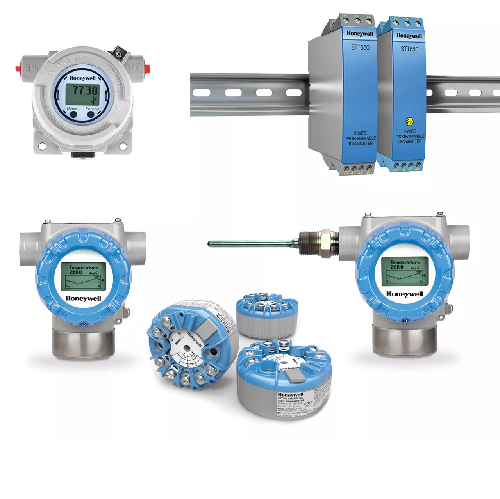
Tell us about your requirement

Price:
Quantity
Select Unit
- 50
- 100
- 200
- 250
- 500
- 1000+
Additional detail
Mobile number
Email

More Products in Honeywell Paperless Recorders Category
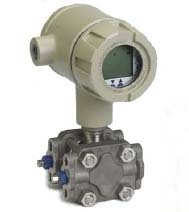
Honeywell Differential Pressure Transmitter
Price 29000.00 INR / Piece
Minimum Order Quantity : 10 Pieces
Power : 24 VDC
Temperature : 40C to +85C
Material : Metal
Load Capacity : Up to 600 Ohms
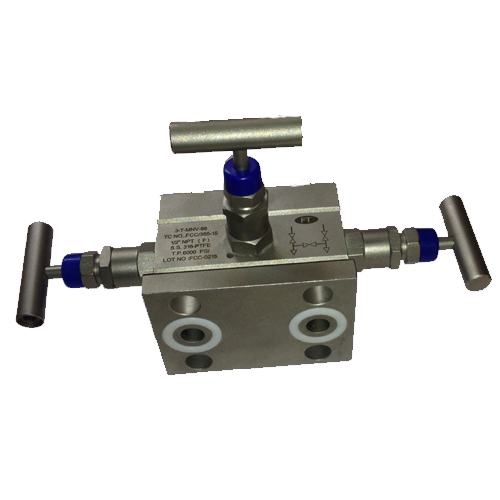
Manifold Valves
Price 1000 INR / Piece
Minimum Order Quantity : 1 Piece
Power : Manual Operation
Temperature : 40C to 220C
Material : SS
Load Capacity : Up to 6000 PSI
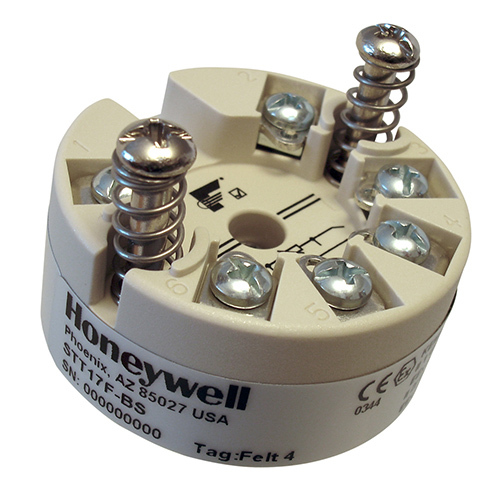
Head Mounted Temperature Transmitter
Price 2200.00 INR / Piece
Minimum Order Quantity : 100 Pieces
Power : 24 Volt (v)
Temperature : 40 to 85 Celsius (oC)
Material : Metal


 Send Inquiry


Our Products
- Honeywell Gas Burner Controls
- Honeywell HVAC Controls
- Honeywell Paperless Recorders
- Honeywell Limit Switches
- Baumer Pressure & Temp Gauges
- Dwyer HVAC Sensors
- Honeywell Micro Switches
- Honeywell PID Controllers
- Honeywell Sensor IC Chips
- Greystone HVAC Sensors
- Thermodynamic Steam Traps
- Kavlico Pressure Transmitters
- City Technology Gas Sensors
- Honeywell Thermostat Switches
- Secure Energy Meter
- Honeywell Water Meter
- Honeywell Oil Flow Meter
- Honeywell Pressure Transmitter
- Honeywell Barcode Scanner
- Honeywell Safety Products
- Honeywell RFID System
- Honeywell Mobile Computer
- Honeywell Barcode Printer
- Honeywell Particle Sensor
- IP Converter
- Pneumatic Positioner
- Proximity Sensor
- Rotary Encoder
- Programmable PID Controllers
- Switch Mode Power Supply
- ABB Electromagnetic Products
- City Technology Sensors
- Secure Bi-Directional Meters
- Autonics Products
- Electromagnetic Flow Meter
- Fiber Optic Cable
- Optical Amplifiers
- Modular Tower Light
- Piezo Buzzer
- Photoelectric Sensors
- Digital Counters
- Hybrid Recorder
- Digital Paperless Recorder
- Vision Sensors
- Piston Valves
- Honeywell Torque Sensor
- IOT Gateway and IOT Devices
- Dew Point Sensors
- Thermal Transfer Ribbon
- Temperature Sensors
- Level Switch


232, Sunrise Mall, Near Swaminarayan Mandir, Judges Bungalow Road, Vastrapur, Ahmedabad - 380015, Gujarat, India

Mr Rajesh Garg
(CEO)
Mobile :08045477039
 Send Inquiry
 Send SMS
Developed and Managed by Infocom Network Private Limited.


 English
 Spanish
 French
 German
 Italian
 Chinese (Simplified)
 Japanese
 Korean
 Arabic
 Portuguese