
Call us now :08045477039
 Send Inquiry
 Send Inquiry
Honeywell PID Controller DC1020
Price 4000 INR/ Piece
MOQ : 1 Piece
Honeywell PID Controller DC1020 Specification
- Voltage
- 240 Volt (v)
- Power
- 5 VA Max
- Usage
- Industrial temperature/process control
- Display
- Dual 4-digit 7-segment LED
- Product Type
- PID Controller
- Material
- Plastic Front Bezel with Metal Enclosure
- Design
- Panel Mount
- Power Source
- Electric
- Accuracy
- 0.5% FS 1 digit
- Illuminant
- LED Display
- Dimension (L*W*H)
- 48 48 110 mm
- Weight
- 500 Grams (g)
- Input Type
- Thermocouple, RTD, Voltage, Current
- Control Method
- PID, ON/OFF, Manual, Self-tuning
- Ambient Temperature
- 0 to 50C (Operation)
- Setpoint
- Single Setpoint
- Alarm
- 2 programmable alarms
- Display Resolution
- 1C / 0.1C (selectable)
- Mounting Method
- Panel Mount with Clamps
- Output Type
- Relay, SSR Drive, or Analog
- Control Output Capacity
- Relay: 3A at 250VAC; SSR: 12VDC, 20mA
- Sampling Cycle
- 250 ms
- Communication
- Optional RS-485 MODBUS (depending on model configuration)
- Humidity
- Less than 90% RH (non-condensing)
Honeywell PID Controller DC1020 Trade Information
- Minimum Order Quantity
- 1 Piece
- Payment Terms
- Cash in Advance (CID), Cash Advance (CA)
- Supply Ability
- 100 Pieces Per Week
- Delivery Time
- 1 Days
- Main Domestic Market
- All India
About Honeywell PID Controller DC1020
Honeywell PID DC1020 Controller
| Honeywell PID DC1020 Controller Specification |
|
|
| Honeywell Low cost PID controller |
| Four Different Model DC1010, DC1020, DC1030, DC1040 |
| Available in four different sizes: 1/16 DIN, 1/8 DIN, 3/16 DIN, 1/4 DIN |
| Set point programming |
| Two large 4 digits displays and one 10 LED bargraph display PV, SP and |
| Setpoint Programming |
| Extended Alarm capability |
Versatile Control Methods
The Honeywell DC1020 offers multiple control strategies like PID, ON/OFF, manual, and self-tuning. This flexibility enables it to adapt perfectly to diverse application needs, ensuring both precision and efficiency in process control environments.
Wide Input and Output Compatibility
Designed to accept thermocouple, RTD, voltage, or current signals, the DC1020 maximizes installation possibilities. Outputs are supported via relay, SSR drive, or analog, accommodating different types of systems and actuator requirements.
Industrial-Grade Durability and Display
Built with a robust plastic front bezel and metal enclosure, this controller promises longevity in demanding settings. Its dual 4-digit, high-visibility LED display ensures accurate reading and operation even in challenging industrial lighting.
FAQ's of Honeywell PID Controller DC1020:
Q: How does the Honeywell PID Controller DC1020 enhance process control?
A: The DC1020 improves process control through precise PID, ON/OFF, manual, and self-tuning methods. Its high-resolution, dual LED display and accuracy of 0.5% FS + 1 digit allow for detailed adjustments, resulting in stable and reliable temperature/process regulation.Q: What types of input signals are compatible with the DC1020 controller?
A: This controller works with thermocouple, RTD, voltage (analog), and current signals, making it highly adaptable for various industrial process measurement requirements.Q: When should you consider using the DC1020 in industrial applications?
A: The DC1020 is ideal whenever precise, reliable temperature or process control is needed-especially in scenarios requiring frequent alarms, fast responses (250 ms sampling), or diverse input/output formats. It is suitable for environments where single setpoint control and programmable alarms are advantageous.Q: Where is the DC1020 usually installed within an industrial setup?
A: This controller is designed for panel mounting using clamps, allowing seamless integration into control panels or enclosures typically found in industrial facilities.Q: What is the process for setting alarms on the DC1020?
A: Alarms are programmed directly via the front panel interface. Users can configure two independent alarms for crucial process variables, enhancing safety and providing rapid warnings about deviations.Q: How is the DC1020 beneficial for users regarding communication and flexibility?
A: With optional RS-485 MODBUS communication, the DC1020 integrates easily with PLCs and supervisory systems. Its flexible output and input design accommodate a broad range of system architectures, increasing operational efficiency.Q: What environmental conditions can the DC1020 withstand during operation?
A: The DC1020 operates reliably in temperatures from 0C to 50C and humidity below 90% RH (non-condensing), ensuring consistent performance in most industrial environments.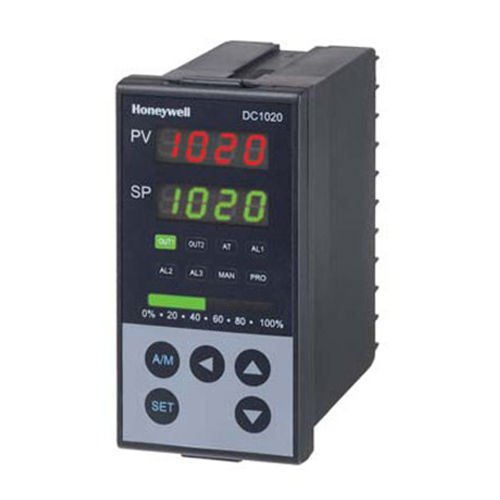
Tell us about your requirement

Price:
Quantity
Select Unit
- 50
- 100
- 200
- 250
- 500
- 1000+
Additional detail
Mobile number
Email

More Products in Honeywell PID Controllers Category
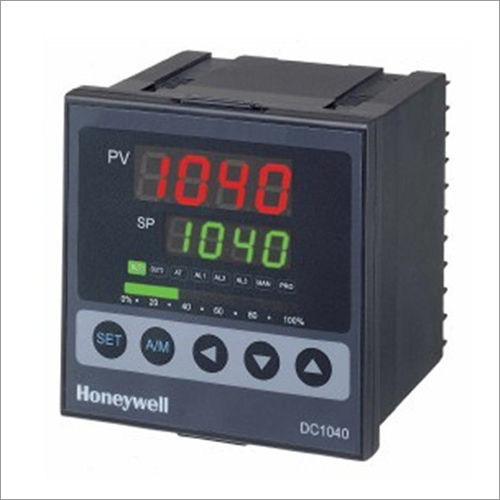
Honeywell PID Controller DC1040
Minimum Order Quantity : 1 Piece
Display : Dual 4digit 7segment LED display
Usage : Industrial process control
Power Source : Electric
Power : 5VA max
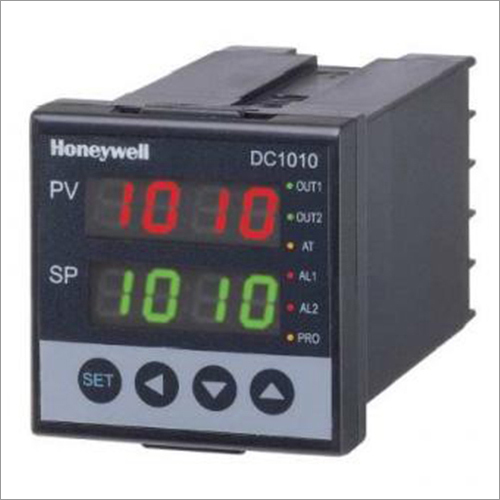
Honeywell PID Controller DC1010
Price Range 3000.00 - 10000.00 INR
Minimum Order Quantity : 1 Piece
Display : Dual 4digit LED display
Usage : Temperature and process control
Power Source : Electric
Power : 5 VA (max)
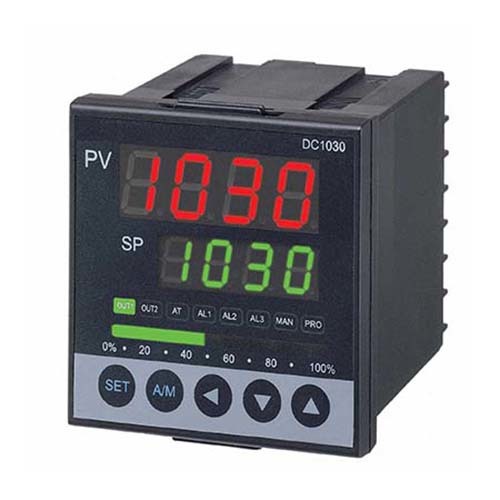
Honeywell PID Controller DC1030
Price Range 3000.00 - 10000.00 INR
Minimum Order Quantity : 1 Piece
Display : Dual 4digit seven segment LED
Usage : Process Control
Power Source : Electric
Power : 8 VA maximum


 Send Inquiry


Our Products
- Honeywell Gas Burner Controls
- Honeywell HVAC Controls
- Honeywell Paperless Recorders
- Honeywell Limit Switches
- Baumer Pressure & Temp Gauges
- Dwyer HVAC Sensors
- Honeywell Micro Switches
- Honeywell PID Controllers
- Honeywell Sensor IC Chips
- Greystone HVAC Sensors
- Thermodynamic Steam Traps
- Kavlico Pressure Transmitters
- City Technology Gas Sensors
- Honeywell Thermostat Switches
- Secure Energy Meter
- Honeywell Water Meter
- Honeywell Oil Flow Meter
- Honeywell Pressure Transmitter
- Honeywell Barcode Scanner
- Honeywell Safety Products
- Honeywell RFID System
- Honeywell Mobile Computer
- Honeywell Barcode Printer
- Honeywell Particle Sensor
- IP Converter
- Pneumatic Positioner
- Proximity Sensor
- Rotary Encoder
- Programmable PID Controllers
- Switch Mode Power Supply
- ABB Electromagnetic Products
- City Technology Sensors
- Secure Bi-Directional Meters
- Autonics Products
- Electromagnetic Flow Meter
- Fiber Optic Cable
- Optical Amplifiers
- Modular Tower Light
- Piezo Buzzer
- Photoelectric Sensors
- Digital Counters
- Hybrid Recorder
- Digital Paperless Recorder
- Vision Sensors
- Piston Valves
- Honeywell Torque Sensor
- IOT Gateway and IOT Devices
- Dew Point Sensors
- Thermal Transfer Ribbon
- Temperature Sensors
- Level Switch


232, Sunrise Mall, Near Swaminarayan Mandir, Judges Bungalow Road, Vastrapur, Ahmedabad - 380015, Gujarat, India

Mr Rajesh Garg
(CEO)
Mobile :08045477039
 Send Inquiry
 Send SMS
Developed and Managed by Infocom Network Private Limited.


 English
 Spanish
 French
 German
 Italian
 Chinese (Simplified)
 Japanese
 Korean
 Arabic
 Portuguese